When you talk about Afro-Brazilian culture you refer to the cultural manifestations of Brazil that had some degree of influence of African culture from the time of colonialism to the present day. The culture of Africa came to Brazil, mostly due to the African slavery in the era of maritime slave trade. In Brazil, African culture also suffered the influence of European and indigenous cultures, so the characteristics in Brazilian culture are generally mixed with various cultural references.
Although traditionally devalued in the colonial era and the nineteenth century, aspects of Brazilian culture of African origin went through a process of revaluation from the twentieth century that continues today. Important traces of African culture can be found today in various aspects, such as popular music, religion, cuisine, folklore and popular festivities. The states of Maranhão, Pernambuco, Alagoas, Bahía, Minas Gerais, Espírito Santo, Rio de Janeiro, San Pablo and Rio Grande do Sul were the most influenced by the culture of African origin, both for the number of slaves received during the time of the traffic as for the internal migration of slaves after the end of the sugarcane cycle in the northeast region.
Religion
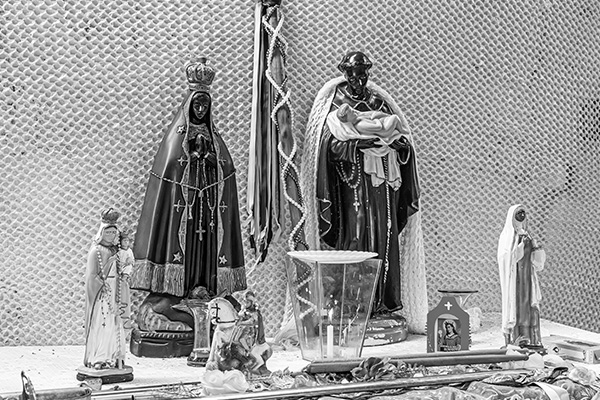
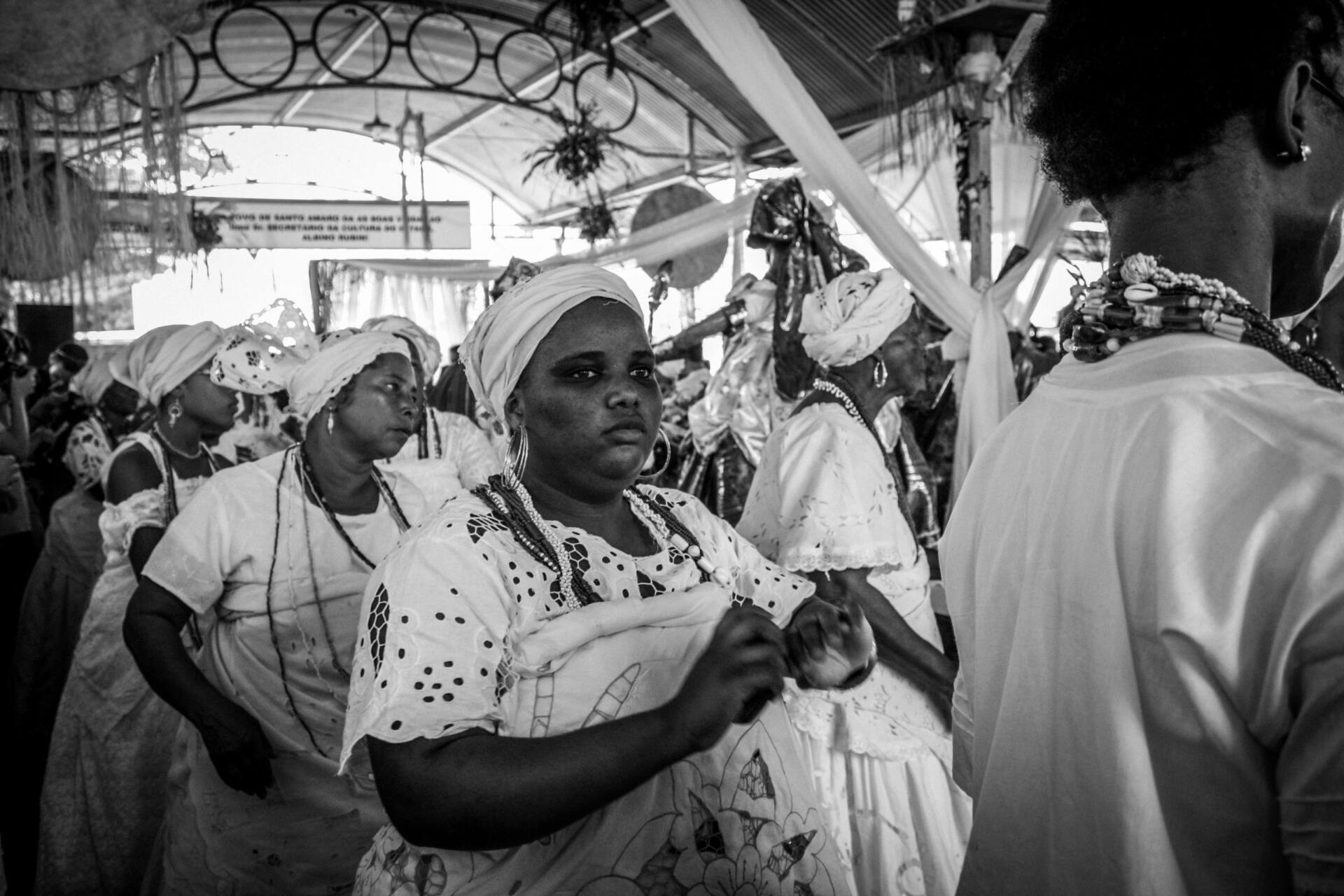
Black people brought from Africa as slaves were generally immediately baptized and forced to adopt Catholicism. The conversion was only superficial and the religions of African origin managed to remain through their secret practice or syncretism with Catholicism. Some Afro-Brazilian religions still maintain their African roots almost completely, as is the case with the traditional houses of Candomblé and the Northeast Xangô; others were formed through religious syncretism, such as Batuque, Xambá and Umbanda.
To a greater or lesser degree, Afro-Brazilian religions show influences of Catholicism and European magic, as well as of American Indian shamanism. Syncretism is also manifested in the tradition of the baptism of children and the wedding in the Catholic Church, even when the faithful openly follow an Afro-Brazilian religion.
Initially despised, Afro-Brazilian religions were or are openly practiced by several important intellectuals and artists such as Jorge Amado, Dorival Caymmi, Vinícius de Moraes, Caetano Veloso, Gilberto Gil, Maria Bethânia and Gal Costa.
Art
There were many painters and artists who dedicated themselves to show the beauty of Candomblé, Umbanda and Batuque in their fabrics. An example is the Argentine sculptor and painter Carybé who dedicated a good part of his life in Brazil sculpting and painting the Orixás and their celebrations in the smallest details; his sculptures can be seen in the Afro-Brazilian Museum and he has published some books of his work.
In the photograph, the Frenchman Pierre Fatumbi Verger, who in 1946 visited Bahia and stayed until the last day of his life, portrayed in black and white the Brazilian people and all the nuances of Candomblé. In addition, he later became part of the religion, both in Brazil and in Africa where he was initiated as babalawo; the Pierre Verger Foundation is still alive in Salvador, where its entire photographic collection is located.
Other examples are the African Alaká, known as a cloth from the coast of Brazil. It is produced by weavers from Candomblé Ilê Axé Opô Afonjá terreiro in Salvador, and
the sculptures of Master Didi, Alapini (high priest) of the Cult of the Egungun and Assogba (supreme priest) of the cult of Babalú Ayé and Orixas of the earth, whose work is directed entirely to Yoruba mythology and art.
The most representative of music and dance is samba. It arrived from Africa at the end of the 19th century by African immigrants and acquired international popularity from 1920 to 1930. It has been influenced by many Angolan and Latin American musical genres and its popularity has been steadily increasing internationally, especially thanks to the carnival.
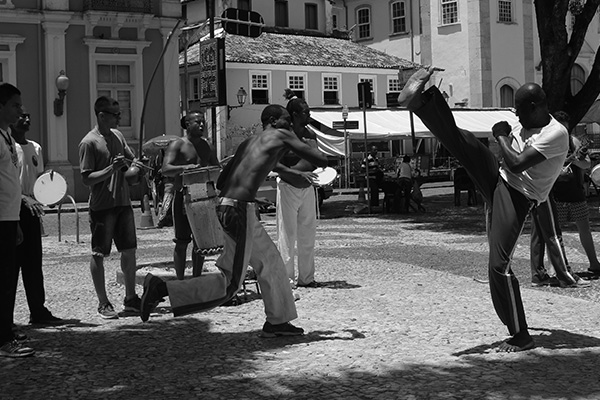
And we can’t leave out the capoeira! An Afro-Brazilian martial art that combines facets of dance, music and acrobatics, as well as body expressions. It was developed in Brazil by African descendants with indigenous influences probably in the early 16th century. It is known for its fast and complex movements, which use arms and legs to perform maneuvers of great agility in the form of kicks and feints among others. Capoeira as a fighting style incorporates low and sweeping movements, while in the sports field more emphasis is placed on acrobatics and ritualized demonstrations of skill. It is practiced with traditional Berimbau music. The Roda de Capoeira (circle of people doing Capoeira) was declared Intangible Cultural Heritage of Humanity by Unesco on November 26, 2014.
Cuisine
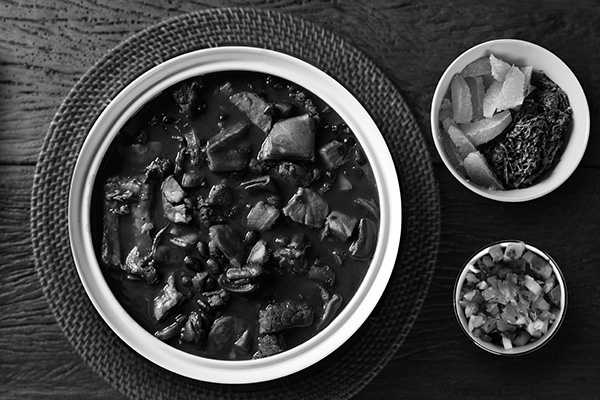
The Bahian cuisine is the one that most demonstrates the African influence in its typical dishes such as acarajé, caruru, vatapá and moqueca. These dishes are prepared with palm oil, extracted from an African palm tree brought to Brazil in colonial times. In Bahia there are two ways to prepare these “afro” dishes. In one, the simplest, the meals do not carry much seasoning and are made in the candomblé terreiros to be offered to the Orixás. The other way is used outside the terreiros; meals are prepared with a lot of seasoning and are tastier, being sold by the acarajé bahian women and tasted in restaurants and residences. In fact, in the Memorial Museum das Bahianas do Acarajé, is presented this recipe of one of the most typical meals of Salvador de Bahia. It is a bean dough fried in dendê oil and usually filled with shrimp and spicy sauce. It is not difficult to find acarajé stands on the streets of Bahia attended by women with typical Bahian dresses.
(photo acarajé with bahiana)
Brazilian feijoada is considered the national dish of Brazil. It is said that it was created in the abodes of the slaves and that it served as food for the slaves in the colonial era, who cooked the leftovers and the giblets that remained from the feasts of the patrons, along with water and black beans. Its base consists of a plate of beans, accompanied by rice and cassava flour on top, but logically we find a thousand variations throughout the Brazilian territory.
Afro-Brazilian culture and studies
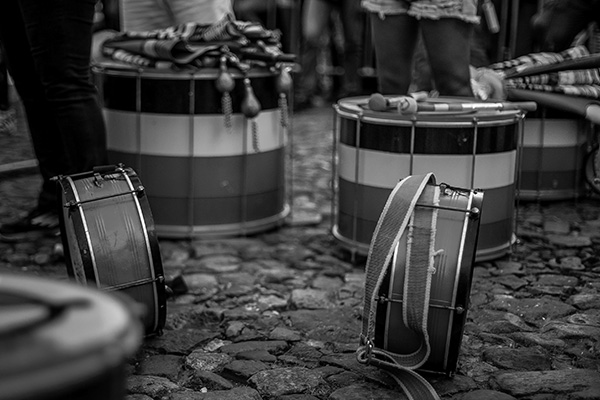
The interest in Afro-Brazilian culture is manifested by the many studies in the fields of sociology, anthropology, ethnology, music and linguistics, among others, focused on the expression and historical evolution of Afro-Brazilian culture.
Many Brazilian scholars like the writer Jorge Amado, the poet and writer Antonio Olinto, the writer and journalist João Ubaldo, the anthropologist and museologist Raul Lody, among others, as well as foreigners, such as the French sociologist Roger Bastide, the American ethnologist researcher Ruth Landes and the Argentine painter Carybé, dedicated themselves to the investigation and registry of data on the Afro-Brazilian culture, which had not yet been studied in detail.
Some even infiltrated Afro-Brazilian religions, such as João del Río, for that purpose and others were invited to join Candomblé as effective members, receiving honorary positions and financially helping.
Currently studies of Afro-Brazilian culture continue throughout the world and many foreigners come to Brazil to obtain information and knowledge first hand. More than 15 years ago the Day of Black Consciousness was established every November 20 and seeks to refer to the resistance of black people against slavery in general, since the first transport of Africans to Brazilian soil (1549). Some entities such as the Black Movement (the largest of the genre in the country) organize lectures and educational events in order to avoid the development of self-prejudice, that is, of inferiorization before society.
—
Among many others, there are two especially interesting destinations for those seeking to connect with Afro-Brazilian culture and better understand the legacy left by Africans in all the aspects mentioned above.
Salvador de Bahia
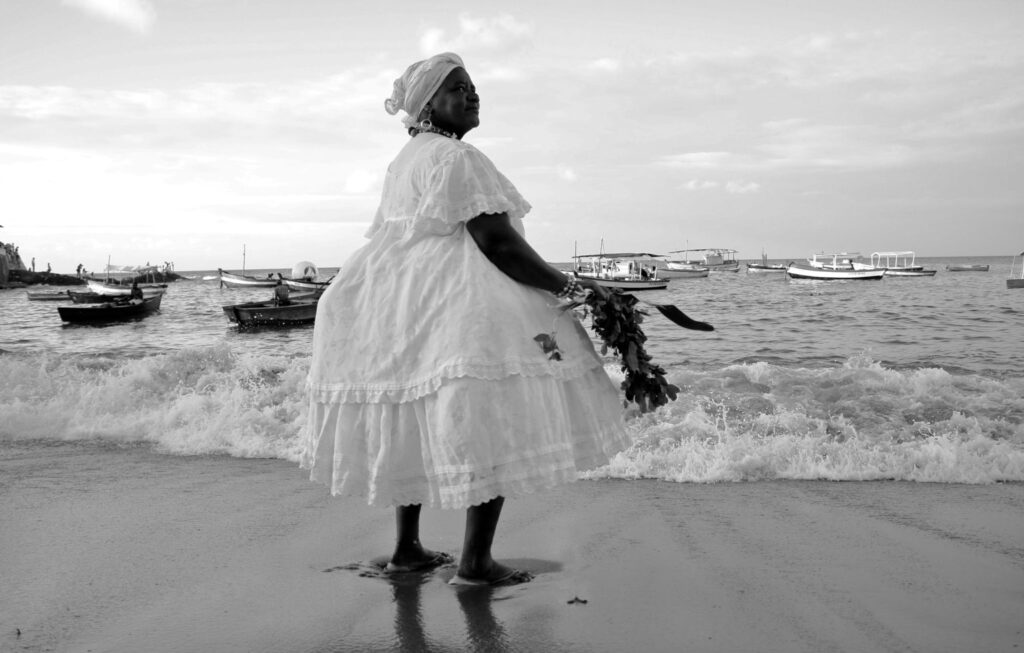
During the Portuguese colonization, the Bay of All Saints had a fundamental importance as an export port in the southern hemisphere, from where products such as Brazilian sugar and Bolivian silver were sent to European metropolises. In addition, it was a port of intense circulation of African slaves in the New World and that is why its influence makes it the center of Afro-Brazilian culture.
Salvador has the largest community of Africans in Brazil, so it offers a broad vision of the heritage and history of Africa and special knowledge about the transatlantic slave trade and its legacy through key historical sites in the city of Salvador. For example, Fuerte and Faro Barra, where the slaves arrived and the Tororó dike with its monument dedicated to the religious heritage of the Orixas. In the historic center there is the Afro-Brazilian Museum whose collection highlights the African perspective in the formation of Brazilian identity and culture. Also the Church of Rosario de los Negros, the first black Christian brotherhood, the Casa de Benin, an African cultural center.
There are innumerable samples of African legacy in this city, capital of Bahia, that remain so alive and also continue to gain importance for the entire population. Every time it stands out more, it is recognized and integrated into the daily life of the locals and in every corner you can find a sample, a taste of what this means. Street food, like acarajé, the music, the drums, the crafts, the paintings, the language, absolutely everything is impregnated with Africa mixed with Brazil.
Luxury Experience in Salvador de Bahia
Cachoeira
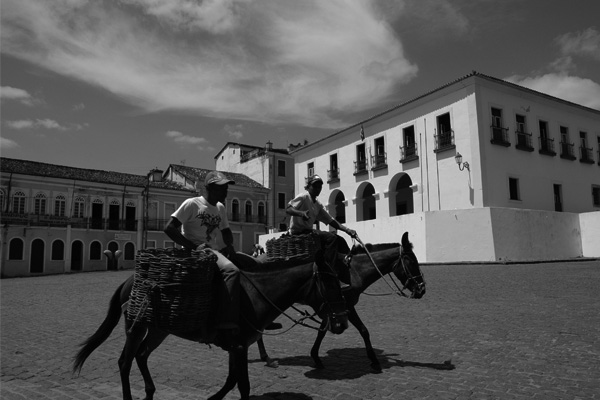
Cachoeira is a historical and cultural city located 2 hours from Salvador. This interesting city is full of colonial monuments and Afro-Brazilian culture. There are many mansions and monuments such as convents and churches of the eighteenth century, but also Cachoeira is the Brazilian center of Afro-Brazilian religion where we find the largest number of Candomblé temples, a religion that is very strong in this region.
But the Recôncavo Baiano goes beyond the official history recorded in books and architecture; Cachoeira and its surroundings have very rich cultural experiences. The quilombo Kaônge is an example of this wealth, which offers through the Rota da Liberdade (Freedom Rout), an experience of community ethnic tourism, where you can experience the daily life of the quilombola, its knowledge and customs. The conversations with the political and religious leaders also enrich the visit with their memories and teachings, in addition to offering the possibility of spending the night in quilombo homes to live this contact even more authentically. The quilombo also promotes the Oyster Festival, which shows the gastronomic delicacy in several dishes, such as fried oysters, natural oysters and oyster moqueca. The annual event that always takes place in October, unites gastronomy with a moment of celebration and establishment of new achievements by the group. Another important cultural event in the region is the Samba de Roda, which brings together music, dance and poetry in a combination of African musical instruments along with the presence of viola and Portuguese tambourines.
And the Festa da Boa Morte (Festival of Good Death), held annually in August, also marks the struggle for the liberation of slaves, mixed with Afro-Brazilian religiosity. A central component of the African Matrix cultures, religiosity promotes experiences that mix Catholicism, as well as more than 50 Candomblé and Umbanda terreiros in the region. An indicator of this syncretism is the patron saint of Cachoeira, Our Lady of the Rosary, a black Catholic saint.
If it’s about Afro-Brazilian legacy, in this region we find lots of resources to get to know it, understand it, experience it and integrate it into the perception we have of Brazil, because Africa cannot be separated from the history of Brazil and you can feel it in each corner. There are many ways to experience it, whether for educational purposes such as the student groups who have come to do specialized tours, or simply as an instructive and fun experience, because something that Afro-Brazilian culture does not lack despite its history is rhythm, flavor, music and passion..